Why are my wipers streaking or juddering? Causes and fixes
Wipers streaking is usually caused by a dirty or waxy windscreen, or by rubber that has worn, split or hardened. Juddering (chattering) is more often a fit problem: the wrong blade size, a blade that isn't seated properly, or an arm holding the rubber at the wrong angle. Clean first, check the fit second, and replace the blades third.
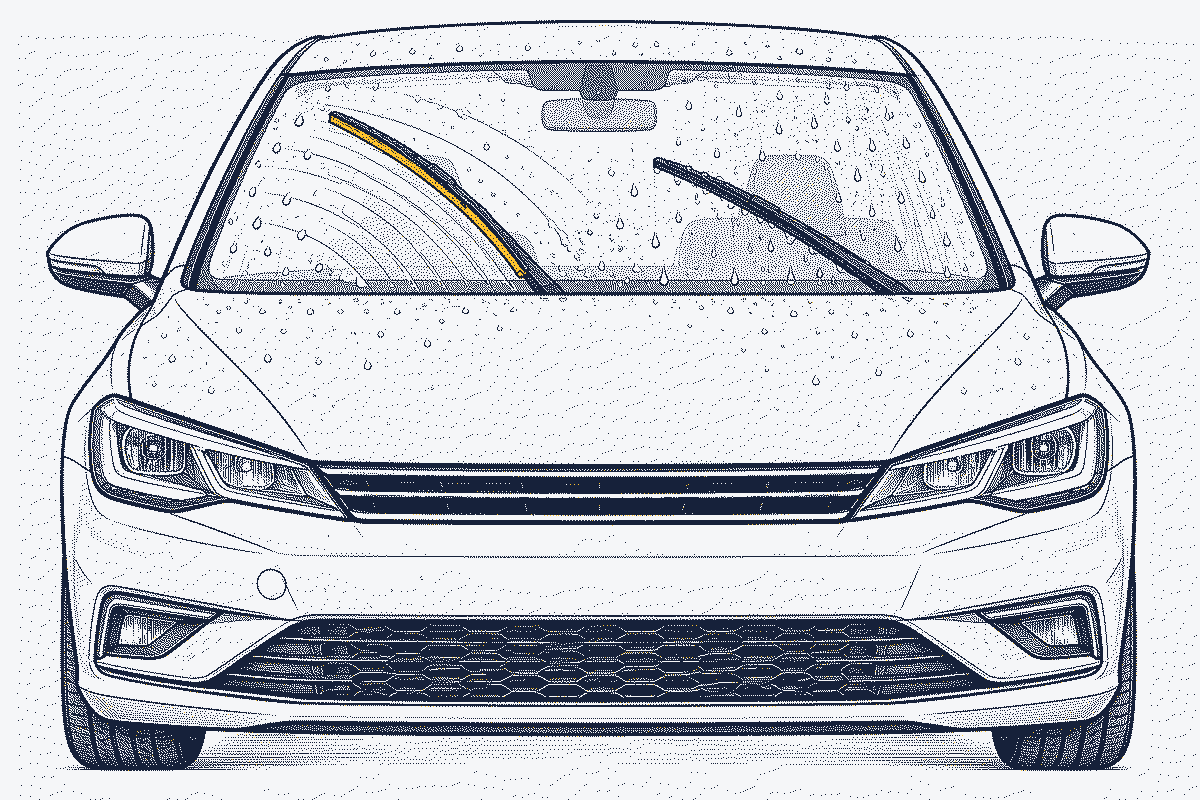
Working in that order saves you buying blades you didn't need, and stops a new set being ruined by the same dirty screen.
Why are my wipers streaking?
Streaks are thin lines of water or grime left behind the blade. The common causes:
- Dirt on the rubber. Road film, pollen and grit build up along the wiping edge and drag a line across the glass.
- Wax or polish on the screen. Car shampoo with wax, or polish that drifted onto the glass, leaves a film the blade smears rather than clears.
- Worn or split rubber. The edge loses its sharp corner with use, sunlight and frost. A nick or split leaves a line in the same place on every sweep.
- Weak screenwash. Plain water does little against road grime, and in winter it can freeze on the glass.
Why are my wipers juddering or chattering?
Judder is the blade skipping across the glass instead of gliding. The common causes:
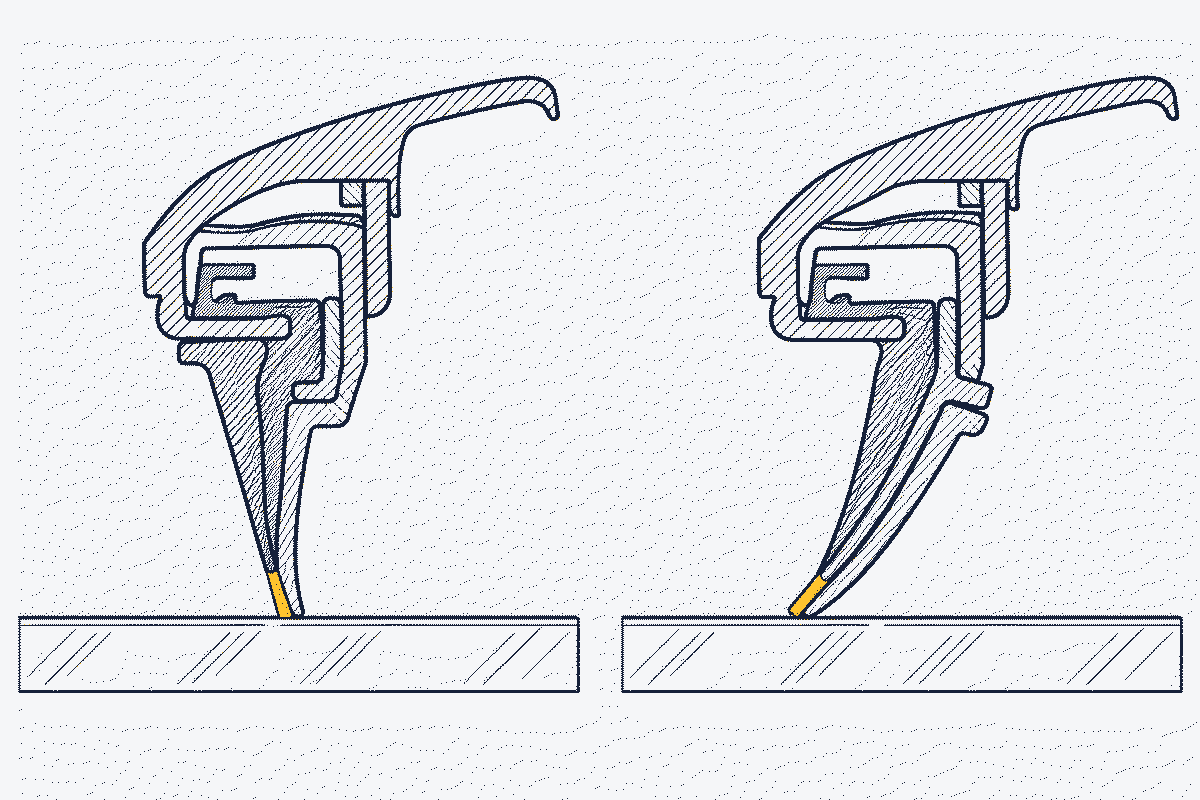
- The rubber edge isn't flipping over. As the blade changes direction, the rubber should lean the other way. If it has hardened from cold or age, it stutters instead.
- Arm angle. If the arm has been bent or twisted, for example by lifting it awkwardly or by ice, the rubber meets the glass at the wrong angle.
- Wrong blade size or type. A blade that is too long for the arm or the screen's curve can lift at the ends and bounce.
- Blade not seated properly. A connector that hasn't fully clicked home lets the blade rock.
- A dry or contaminated screen. Running wipers on a nearly dry screen, or over a film of wax or rain repellent, makes them grab.
How do I stop my wipers streaking? Fix it in this order
Work down this list and test after each step. Streaking is often fixed by the first two.
- Clean the windscreen properly. Wash the outside with a dedicated glass cleaner and a clean cloth, paying attention to the bottom of the screen where the blades park. Check whether any wax or polish has got onto the glass.
- Clean the rubber. Lift each arm, wipe along the rubber edge with a damp cloth and a little screenwash until the cloth comes away clean. Don't scrape the edge or use anything abrasive.
- Use proper screenwash. Fill the reservoir with screenwash mixed as the bottle directs, not plain water. In colder months use the stronger winter mix the bottle shows.
- Check the blades are seated. Lift each arm and make sure the connector has clicked fully into place. Wiggle the blade gently; it should pivot, not rock loose.
- Check the size. Compare your blades with the sizes for your car. Previous owners sometimes fit the wrong length, and a blade that is too long can lift and judder. Our guide to measuring wiper blade size explains why looking it up beats measuring.
- Check the orientation. On a right-hand-drive car the driver's blade is on the right. Flat blades are often asymmetric, and a set made for a left-hand-drive car can sit wrong on a UK car. See driver and passenger wiper blades.
- Look at the arm. With the blade on the glass, look along it from the end. The blade should sit square to the glass. If the arm looks twisted or the blade is pressed unevenly, the arm may need straightening or replacing; a garage can check it.
- Replace the blades. If the rubber is split, rounded or hard, or streaks remain after cleaning, it's time for new blades. Our guide to when to replace wiper blades lists the signs.
Can the wrong wiper blade size cause streaking?
Yes. Too long, and the blade can overhang the edge of the screen or lift where the glass curves, leaving unwiped bands and making the blade bounce. Too short, and it leaves an uncleared strip at the edge of the sweep.
Sizes differ more than you might expect, which is why guessing goes wrong:
| Car | Driver | Passenger | Rear |
|---|---|---|---|
| Ford Fiesta Mk7 | 26" | 15" | 12" |
| Ford Focus Mk3 | 28" | 28" | 12" |
| VW Golf Mk7 | 26" | 18" | 11" |
| Mini Hatch R56 | 18" | 19" | 10" |
| Vauxhall Astra J | 27" | 25" | 12" |
The Focus Mk3 uses a matching pair, and the Mini R56's passenger blade is longer than the driver's. If you assumed the usual "long driver, short passenger" pattern on either, you'd fit the wrong blades.
Do flat blades streak less than conventional blades?
Not automatically. Flat blades spread pressure along a spring steel spine and suit curved screens, while conventional blades use a metal frame. Either can streak if dirty, worn or the wrong size. Our guide to flat vs conventional wiper blades covers the differences without the marketing.
Do rain repellent treatments cause judder?
They can. A water-repellent coating changes how the rubber slides over the glass, and some drivers find their wipers judder or squeak afterwards, particularly with light rain. If the problem started after a treatment, clean the glass thoroughly and follow the product's own instructions on wiper use. If it persists, the coating may need to wear off or be removed.
Why do my wipers judder in winter?
Cold hardens the rubber, so it can't flip smoothly at each end of the sweep, and ice on the glass gives it nothing to glide on. Clear the screen fully before using the wipers, check the blades aren't frozen to the glass, and never use the wipers to scrape ice. Our winter visibility checklist has the full routine.
Is streaking an MOT problem?
It can be. The MOT requires the wipers to clear the windscreen well enough to give an adequate view of the road, and the washers to supply enough fluid. Blades that smear across your line of sight, or a washer that doesn't reach the screen, risk a fail. The GOV.UK MOT inspection manual has the detail.
Check your car
If cleaning hasn't fixed it, start by confirming you have the right blades. Our wiper pages list driver, passenger and rear sizes plus the fitting type, each checked against the handbook or two independent sources. Go to wipers by car or choose your make, or jump straight to the Nissan Qashqai J11, Vauxhall Corsa D or Hyundai i30 GD.
Common questions
Why do new wiper blades streak?
Usually because the windscreen is still dirty or waxy, and the new rubber is spreading the old film. Clean the glass thoroughly and wipe the new rubber with a damp cloth. If they still streak, check they're the right size and fully seated.
Why do my wipers only judder in one direction?
The rubber edge is probably not flipping over smoothly at the end of the sweep, or the arm is holding the blade at a slight angle. Clean the rubber first; if that doesn't help, have the arm angle checked.
Can I fix a split wiper rubber?
Not reliably. Once the edge is split or rounded it can't wipe cleanly, so replace the blade.
Should I lift my wipers off the screen in frosty weather?
Some drivers do, to stop the rubber freezing to the glass. Check your handbook first: some cars have a service position for lifting the arms clear of the bonnet, and lifting them in the normal parked position can damage the bonnet.
Checked against our verification rules. Spotted something wrong? Tell us.