Which generation is my car? Mk numbers, codes and reg plates
To work out what generation your car is, find when it was first registered (from the V5C logbook, the reg plate or the GOV.UK MOT history check), then match that date against the model's generations. Where the dates overlap, confirm with the shape of the car, the handbook or a dealer using the VIN.
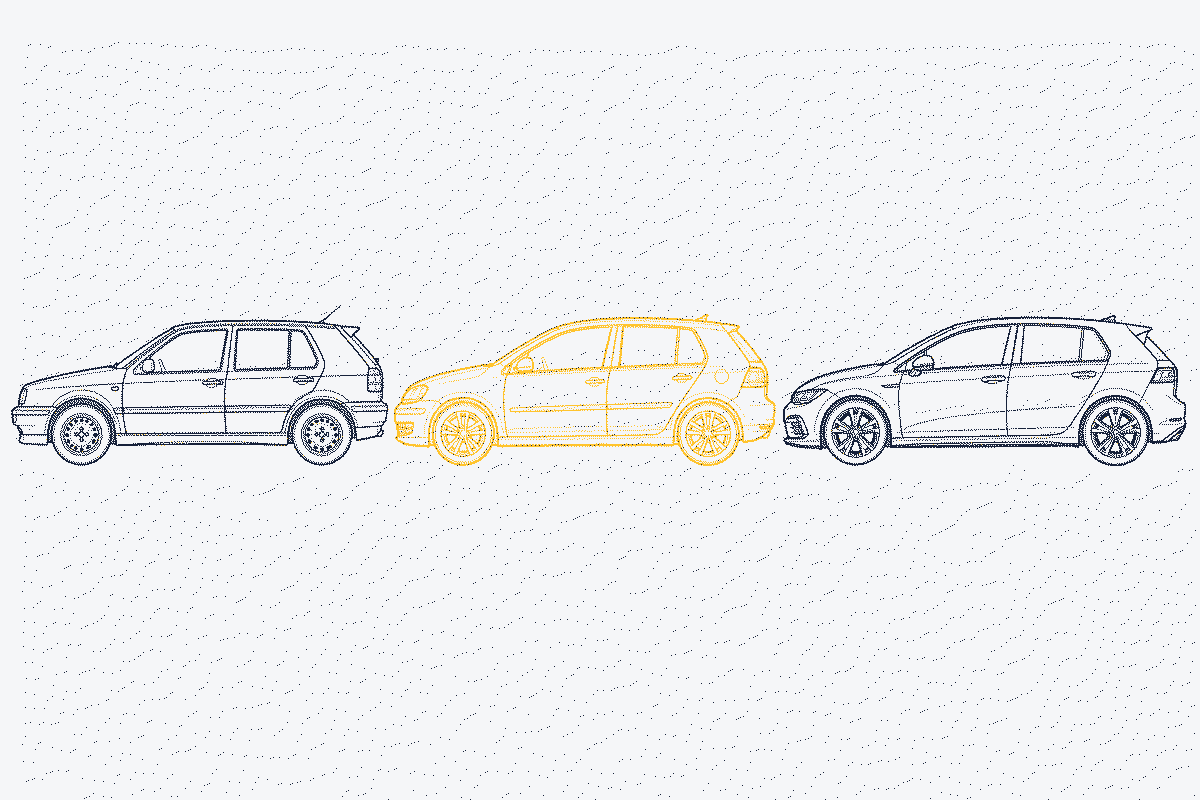
It matters because bulbs and wiper sizes change between generations, sometimes completely. A 2017 Ford Fiesta could be a Mk7 with a 26" driver's blade and a hook fitting, or a Mk8 with a 28" blade and a push-button fitting.
What does "generation" or "Mk" mean?
A generation is a version of a model that stays broadly the same, usually for several years, until the manufacturer launches an all-new replacement. Within a generation, the car may get a facelift: new lights, bumpers or trim partway through its life.
Manufacturers and owners label generations in different ways:
- Mk numbers. Ford, VW and others use Mark numbers: Ford Fiesta Mk7, Ford Focus Mk3, VW Golf Mk7, Skoda Octavia Mk3.
- Letters. Vauxhall uses letters: Corsa D, Corsa E, Astra J.
- Chassis or model codes. Many brands use an internal code: Nissan Qashqai J11, BMW 3 Series F30, Audi A3 8V, SEAT Leon 5F, Hyundai i30 GD, Kia Sportage QL, Toyota Yaris XP130.
- Two codes for one generation. The VW Polo 6R/6C is known by two codes, one for the original version and one for the updated version; our page covers both.
- Plain "1st gen" or "2nd gen". Where there's no widely used code, such as the Peugeot 208 or Hyundai i10, we use the generation number.
How do I find out when my car was first registered?
You have three easy sources:
- The V5C (logbook). It shows the date of first registration along with the make and model.
- The MOT history check. Enter the registration at GOV.UK check MOT history to see the make, model and registration date, plus its past MOT results.
- The DVLA vehicle enquiry. GOV.UK vehicle information shows the vehicle details DVLA holds, including when it was first registered.
The first-registration date is what you need. The year of manufacture can be earlier, especially for cars that sat in stock or were imported.
How do I tell a car's age from its reg plate?

Since September 2001, the two numbers on a UK plate are the age identifier. Plates issued from March to August use the year's last two digits; plates issued from September to February use the year plus 50.
| Year | March–August | September–February (following year) |
|---|---|---|
| 2008 | 08 | 58 |
| 2010 | 10 | 60 |
| 2012 | 12 | 62 |
| 2014 | 14 | 64 |
| 2016 | 16 | 66 |
| 2017 | 17 | 67 |
| 2018 | 18 | 68 |
| 2020 | 20 | 70 |
| 2022 | 22 | 72 |
| 2024 | 24 | 74 |
| 2025 | 25 | 75 |
So a 67 plate was first registered between September 2017 and February 2018. Before September 2001, the age was shown by a prefix letter instead.
A private (cherished) plate can hide a car's age, so if your car has one, use the V5C or the MOT history check instead.
What if my car's date falls between two generations?
New generations rarely arrive on a neat date, and the old one is often still being sold while the new one arrives. That's when the overlap catches people out. From our verified data:
| Model | Earlier generation | Later generation |
|---|---|---|
| Ford Fiesta | Mk7, 2008–2017 | Mk8, 2017–2023 |
| Vauxhall Corsa | D, 2006–2014 | E, 2014–2019 |
If your registration date sits in an overlap year, compare the car's shape and lights with pictures of each generation, look at the handbook cover (it usually names the model and generation), or ask a franchised dealer, who can decode the VIN.
The generation differences can be large. The Fiesta Mk7 uses a 26"/15" front pair with a hook fitting; the Mk8 uses 28"/13" with a push button. A blade for one won't suit the other.
Does a facelift change the bulbs?
Sometimes. A facelift often brings new headlights or rear lights, and a model may switch from bulbs to LED in places. Bulbs can also differ by trim: a halogen headlamp takes a different bulb from a xenon or LED unit on the same car. Where a generation splits by facelift, trim or body style, our car page shows the split. If you're not sure which headlights you have, see halogen, xenon or LED: how to tell.
Where else can I find the generation?
- The owner's handbook. It's written for a specific generation and contains the bulb and often wiper information. Our guide to finding the bulb table in your handbook shows where to look.
- The VIN. The vehicle identification number, on the V5C and usually visible at the base of the windscreen, encodes the model. A dealer can decode it reliably.
- Service records. Invoices often name the model code.
Check your car
Once you know the generation, the car page gives you every bulb and the wiper sizes with sources. Start at choose your make, or go straight to a popular generation:
- VW Golf Mk7, 2012–2020
- Nissan Qashqai J11, 2013–2021 (or the earlier J10)
- BMW 3 Series F30, 2012–2019
- Audi A3 8V, 2012–2020
- VW Polo 6R/6C, 2009–2017
- Ford Focus Mk3, 2011–2018 (or the earlier Mk2)
Common questions
Is the model year the same as the registration year?
Not always. A car can be built in one year and first registered in the next, and some manufacturers use "model year" labels that run ahead of the calendar. For fitment, the first-registration date plus the car's shape is the safer guide.
What does Mk mean on a car?
Mk is short for Mark, meaning a generation of a model. A Golf Mk7 is the seventh generation of the Golf.
Can I find my car's generation from the registration number alone?
The plate's age identifier tells you roughly when it was registered, which narrows it down. Entering the registration into the GOV.UK MOT history check gives the make, model and registration date, which is usually enough to match a generation.
Why does FitsMyCar use codes like J11 or F30?
Because they're how owners, manuals and parts catalogues identify the generation, and they avoid confusion where a model name has run for decades.
Checked against our verification rules. Spotted something wrong? Tell us.