When should you use rear fog lights? Rules and bulbs
Use your rear fog lights only when visibility is seriously reduced, which the Highway Code describes as generally when you can't see for more than 100 metres, and switch them off as soon as visibility improves. Using them in rain or light mist dazzles drivers behind and can hide your brake lights. Most cars take a P21W, W21W or H21W bulb for the rear fog, and it is checked at every MOT on cars first used from 1 April 1980.
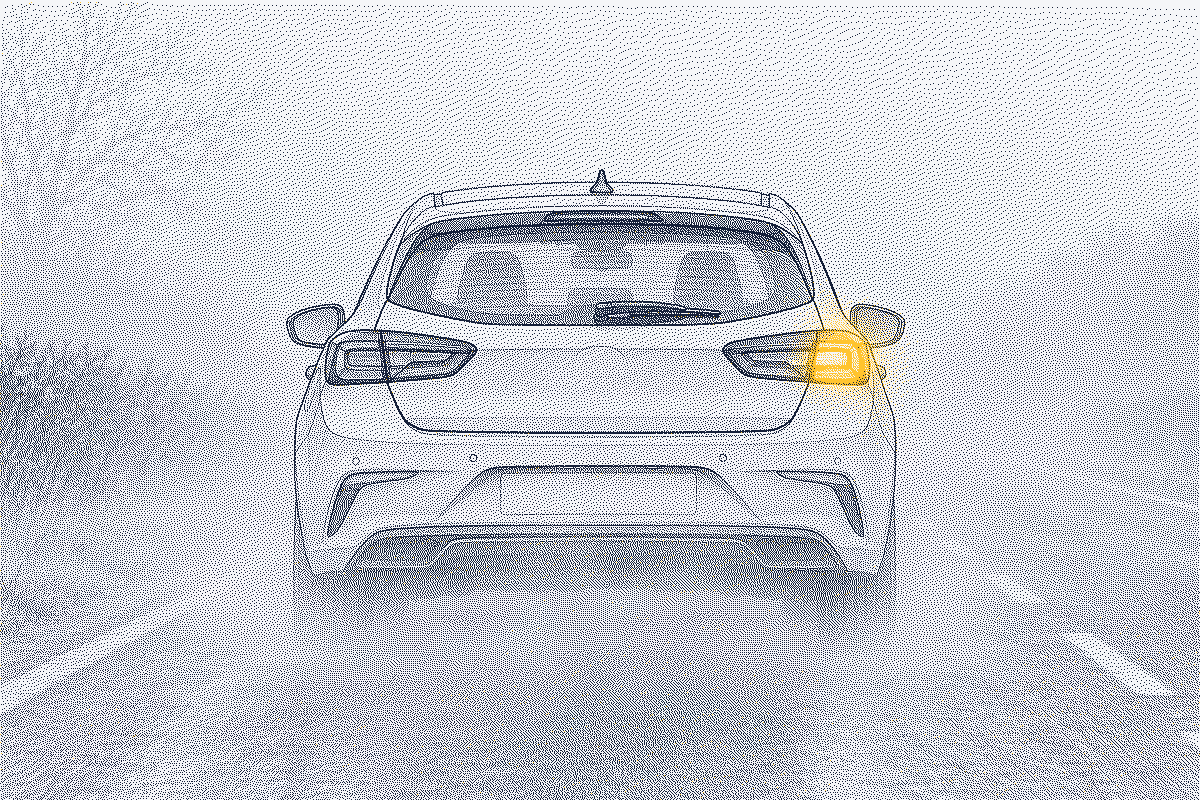
When should you use rear fog lights in the UK?
The rules come from two parts of the Highway Code:
- Rule 226 says you must use headlights when visibility is seriously reduced, generally when you cannot see for more than 100 metres. You may use front or rear fog lights then, but you must switch them off when visibility improves.
- Rule 236 says you must not use fog lights unless visibility is seriously reduced, because they dazzle other road users and can obscure your brake lights.
A practical test: if you can't clearly see something about 100 metres ahead, roughly the length of a football pitch, the conditions may justify rear fogs. If you can, they should be off.
Why shouldn't you leave rear fog lights on?
A rear fog bulb is usually 21 W, the same power as a brake light, and it sits in the same rear lamp area. In clear conditions or ordinary rain, that has two effects:
- Dazzle. The driver behind is staring at a bright red light at close range, which is tiring and makes it harder to judge distance.
- Hidden brake lights. When your fog light is already glaring, the extra brightness of your brake lights coming on is much harder to notice. That is the risk rule 236 is warning about.
The fix is simple: check the dashboard symbol whenever the fog clears, and switch the rear fogs off.
What does the rear fog light symbol look like?
On most cars the rear fog warning light is amber. It shows a lamp shape facing right, with straight horizontal lines for the beam and a wavy vertical line running through them for the fog.
The front fog light symbol is similar but usually green, and faces left with angled lines. If you see an amber light with straight lines, your rear fogs are on.
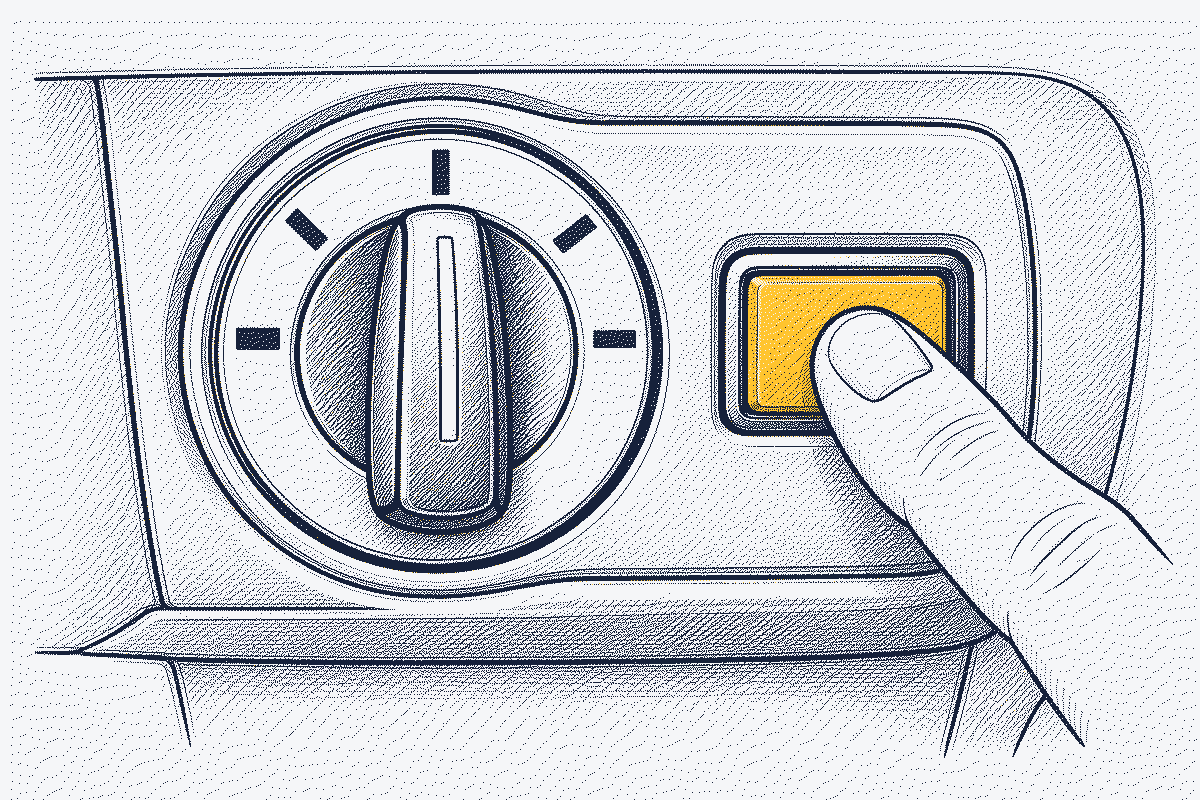
On many cars the rear fogs only work with the dipped beams or front fogs switched on, and turn off when you switch the headlights off. Check your handbook for how yours behaves.
Why does my car only have one rear fog light?
Many cars have a single rear fog light rather than a pair. Where there is only one, it goes on the off side (the driver's side on a UK car) or in the centre of the car, so it is furthest from the kerb and most visible to traffic behind.
On some cars the matching position on the near side holds the reversing light, so the two lamps look identical when the car is parked. If only one rear lamp lights up when you switch the fogs on, that may be how your car was built rather than a failed bulb. Compare it with the handbook before buying anything.
Which bulb does a rear fog light take?
Of the 360 UK car generations we've verified, these are the rear fog entries:
| Rear fog bulb | Type | Verified generations | Examples |
|---|---|---|---|
P21W | 21 W bayonet, BA15s | 141 | Ford Fiesta Mk7, Vauxhall Corsa D, Peugeot 208 |
W21W | 21 W glass wedge, W3x16d | 31 | VW Golf Mk7, Nissan Qashqai J11, Audi A3 8V |
H21W | 21 W bayonet, BAY9s | 27 | Vauxhall Astra J, BMW 3 Series F30, Skoda Octavia Mk3 |
| LED (no bulb) | — | 21 | Renault Clio V |
A few cars use something else entirely. In our data the Mini Hatch R56 takes a W16W wedge in the rear fog position, and the VW Transporter T5 takes a P21/4W twin-filament bulb. These are good examples of why you should check the code for your exact generation rather than assume P21W.
The H21W is easy to confuse with P21W: same 21 W, but a much smaller BAY9s base, so the two are not interchangeable. If the codes are unfamiliar, see how to read a car bulb code.
Is a rear fog light needed for the MOT?
Yes, on cars first used from 1 April 1980. The rear fog lamp is on the MOT checklist alongside the brake lights and indicators. The details are in the MOT inspection manual.
Because you only use rear fogs a few times a year, a failed bulb can go unnoticed for months. Add it to your routine checks; our guide on how to check all your car lights on your own shows how to do it without a helper. With the clocks going back on the last Sunday of October, that is a sensible time to run through every light.
Are front fog lights the same?
No. Front fog lights are optional, many cars don't have them, and they use different bulbs, mostly from the H8/H11 family. The same Highway Code rules apply to using them. See our guide to front fog light bulbs.
Check your car
These pages list the rear fog bulb for each generation, with the source we checked against:
- Ford Fiesta Mk7 bulbs —
P21W - VW Golf Mk7 bulbs —
W21W - Vauxhall Astra J bulbs —
H21W - BMW 3 Series F30 bulbs —
H21W - Mini Hatch R56 bulbs —
W16W - VW Transporter T5 bulbs —
P21/4W
Values can split by facelift, trim or body style; the car page shows any split. Not listed? Browse all bulb pages.
Common questions
Can I use rear fog lights in heavy rain?
Only if visibility is seriously reduced, generally to less than 100 metres. In ordinary rain, dipped headlights are what you need. Spray on a motorway can sometimes cut visibility that far, but switch the fogs off as soon as it improves.
Is it illegal to drive with rear fog lights on?
Rule 236 of the Highway Code says you must not use fog lights unless visibility is seriously reduced. Leaving them on in clear conditions goes against that rule and dazzles drivers behind.
Why is my rear fog light not working?
Check the bulb first, then whether your car only switches the fogs on with the dipped beams lit. If only one side lights up, your car may have a single rear fog by design.
Is the rear fog the same bulb as the brake light?
Sometimes the same code, but a different position. On many cars both are P21W; on others the brake light is a twin-filament P21/5W. Our guide to brake light bulb types explains the difference.
Checked against our verification rules. Spotted something wrong? Tell us.