How to check brake lights on your own, plus every other car light
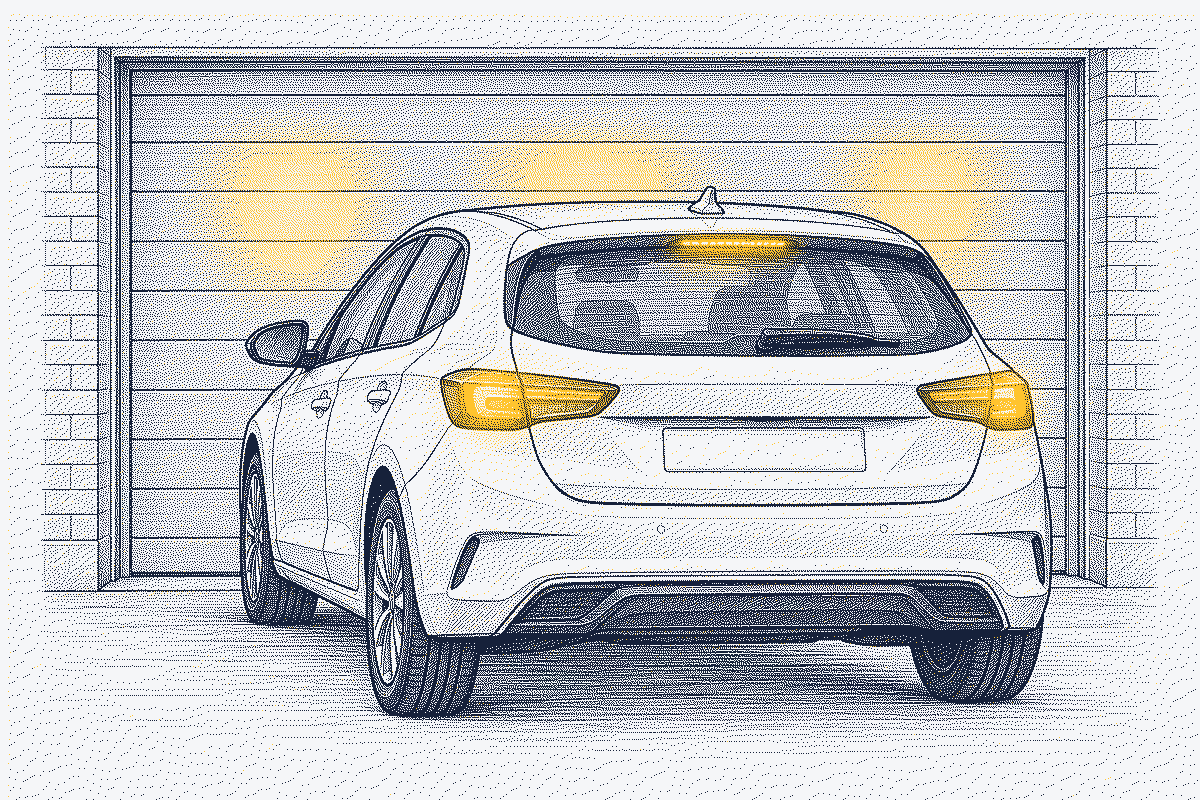
The easiest way to check your brake lights on your own is to reverse up to something reflective, such as a garage door, a shop window or a dark car in a car park, press the pedal and look in your mirrors. If there's nothing to reflect off, wedge the pedal down with a long object or film the back of the car on your phone while you brake. Every other light can be checked by walking round the car with the switches set in the right order.
Why check your car lights yourself?
Most lights you can see from the driver's seat, or at least see the effect of. Brake lights, number plate lamps and the rear fog light are the exceptions: they light up behind you, so a failed bulb can go unnoticed for months.
Every UK MOT checks headlamp aim and operation, sidelights, indicators and hazard lights, brake lights, the rear fog lamp (on cars first used from 1 April 1980), number plate lamps and rear reflectors. Between MOTs, nobody checks them but you, and driving with defective lights can lead to a fixed penalty. A two-minute walk round avoids both.
How do you check brake lights on your own?
There are four ways that work without a helper. Use whichever suits where you park.
1. Use a reflection. Reverse slowly until the back of the car is a metre or two from a garage door, a shop window after dark, or the glossy side of another vehicle. Press the brake pedal and look in your rear-view and door mirrors. You should see both lower brake lights and the high-level brake light come on together.
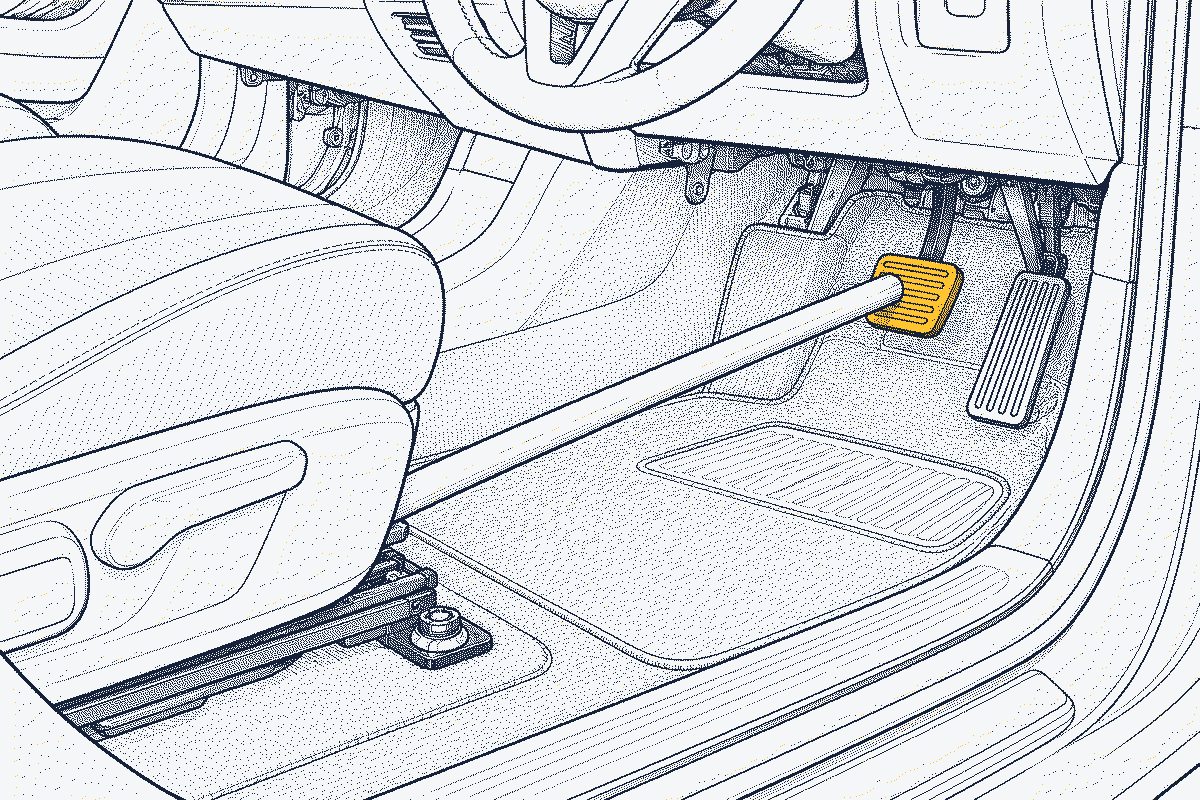
2. Prop the pedal down. With the handbrake on and the engine off, turn the ignition on, then wedge a broom handle, long-handled brush or similar between the brake pedal and the front of the driver's seat. Slide the seat forward to hold it firmly, get out and look. On many cars the brake lights work with the ignition off as well; on others they need it on.
3. Film it. Stand your phone on a wall or the ground behind the car, start recording, then get in and press the pedal a few times. Play it back. This also catches a light that flickers rather than fails outright.
4. Ask the car. Some cars monitor their bulbs and show a warning on the dashboard when one fails. Treat this as a bonus, not a replacement for looking: not every position is monitored, and a bulb can work but be dim or flickering.
Count the lights. Most modern cars have three brake lights: one in each rear cluster and a high-level one in the rear window, spoiler or boot lid. All three should light at once.
In what order should you check every light?
Working through the switches in a fixed order means one walk round covers each setting. Here's an order that works, with the bulb types we see most often across the 360 UK car generations we've verified.
| Step | Switch setting | What to look at | Most common bulb in our data |
|---|---|---|---|
| 1 | Sidelights on | Front sidelights, rear tail lights, number plate lamps | W5W sidelight (175), W5W plate (172) |
| 2 | Dipped beam on | Both headlamps, both tail lights | H7 (201), then H4 (74) |
| 3 | Main beam on | Both headlamps brighter and higher | H7 (89), H4 (73), H1 (56) |
| 4 | Front fogs on (if fitted) | Both front fogs | H11 (98), H8 (57) |
| 5 | Rear fog on | Rear fog lamp(s) | P21W (141) |
| 6 | Left, then right indicator | Front, side repeater and rear on each side | PY21W front (192), PY21W rear (155) |
| 7 | Hazards on | All indicators flashing together | As above |
| 8 | Brake pedal pressed | All brake lights, including high-level | P21/5W (111), LED (60) |
| 9 | Reverse selected, ignition on, engine off | Reversing light(s) | W16W (114), P21W (106) |
Some cars have LED units in some of these positions, which you can't replace as a bulb. If one of those fails, our guide to non-replaceable LED lights explains what to do.
Many cars only have one rear fog lamp, usually on the driver's side, so don't assume the dark lens on the other side is a fault. Our rear fog light guide covers the rules and bulbs. For step 9, keep the handbrake on, and on a manual car hold the clutch down with the engine off while you select reverse; on an automatic, follow the handbook.
How do you check indicators and hazard lights on your own?
Indicators keep flashing while you walk round. Switch on one side, check the front, the side repeater on the wing or mirror, and the rear, then do the other side.
Listen as well as look. If the ticking on the dashboard suddenly runs at double speed, a bulb on that side has usually failed. The same fast flashing can happen after fitting LED indicator bulbs, because the car reads their low power draw as a fault. The indicator bulb guide explains why the amber PY21W and clear P21W can't be swapped.
Finish with the hazard lights, which are tested on the MOT separately from the indicator stalk.
What should you do when you find a dead light?
First, check whether both sides are out. If both brake lights or both number plate lamps have failed at once, look at the fuse or the brake light switch before buying bulbs, because two bulbs rarely go together.
If it's one bulb, look up the exact type for your car before you buy. Brake and tail lights are a good example of why: one car might use a twin-filament P21/5W and another a single-filament P21W with separate tail lights. The brake light bulb guide shows the difference. For headlamps, it's worth reading why you should replace headlight bulbs in pairs.
When should you check your car lights?
Before an MOT, before a long journey, and whenever a passing driver flashes at you for no obvious reason. The clocks go back on the last Sunday of October, which is a good reminder: you'll be using dipped beam on the drive home for the next few months, so it's worth checking everything works before you need it.
Check your car
Our car pages list every bulb position for each generation, with the source we checked it against. A few examples:
- Ford Fiesta Mk7 bulbs:
P21/5Wbrake-tail,W16Wreverse,P21Wrear fog - VW Golf Mk7 bulbs:
W21Wbrake-tail andW21Wrear fog - Vauxhall Corsa D bulbs:
P21/5Wbrake-tail,P21Wreverse - Vauxhall Astra J bulbs: an unusual
W16Wrear indicator andH21Wreverse - Nissan Qashqai J11 bulbs:
W21/5Wbrake-tail,WY21Wrear indicator
Values can split by facelift, trim or body style, and the car page shows any split. For anything else, start from all makes or the bulbs index.
Common questions
Can I check brake lights with the engine off?
Yes. You never need the engine running. On many cars the brake lights work with the ignition off; on others you need to turn the ignition on, so try that if nothing lights up.
Why does my tail light work but not my brake light on the same side?
On cars with a twin-filament bulb such as P21/5W, the 5 W tail filament and 21 W brake filament are separate, so one can fail while the other still works. Replacing the bulb fixes both.
Is a blown number plate light checked on the MOT?
Yes. Number plate lamps are on the list of lights checked at every MOT, along with the rear fog lamp on cars first used from 1 April 1980. You can read the full list in the MOT inspection manual.
Checked against our verification rules. Spotted something wrong? Tell us.