Brake light bulb types: P21/5W, P21W and W21/5W explained
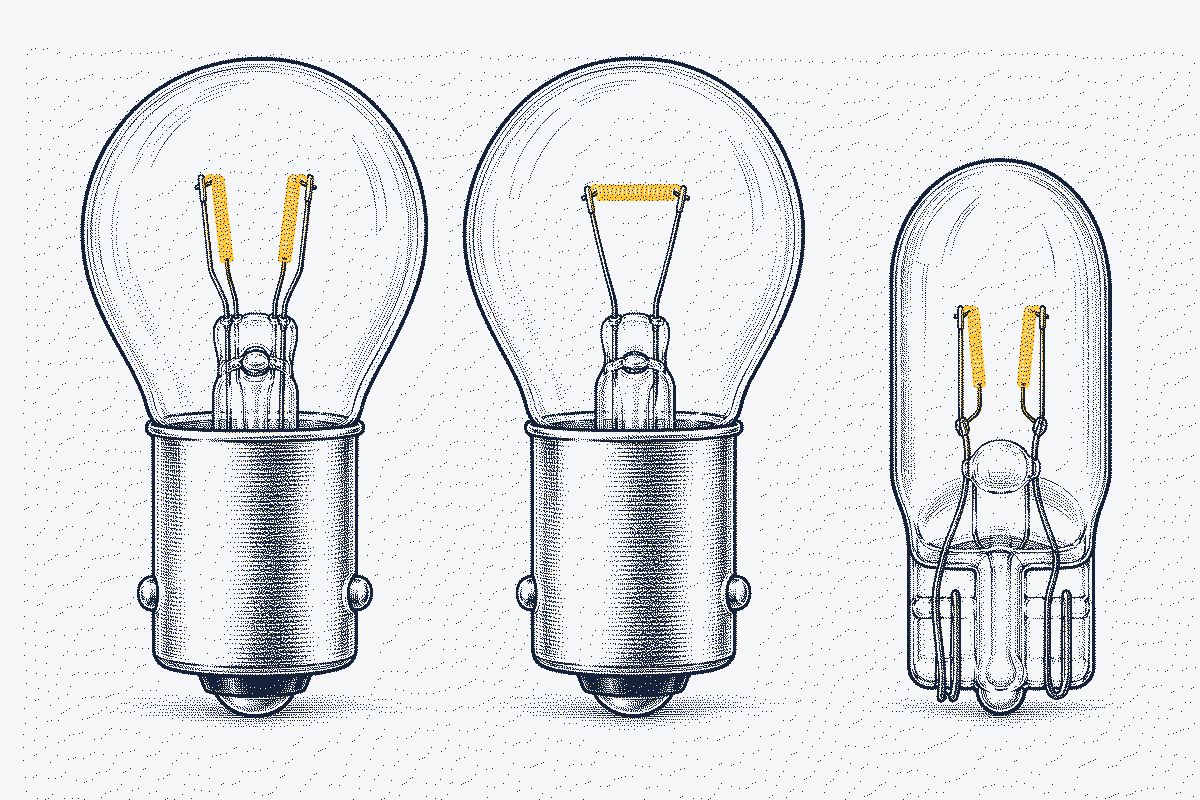
Most of the cars we've verified use one of three brake light bulb types: P21/5W, a twin-filament bayonet bulb that works as both brake and tail light; P21W, a single-filament 21 W bulb used where the tail light is separate; or W21/5W, a twin-filament glass wedge bulb with no metal cap. A growing number of cars have LED rear lights with no bulb to change. Which one your car takes depends on the generation and sometimes the trim, so check your car's page before you buy.
What brake light bulb type does my car use?
Of the 360 UK car generations we've verified, the brake and tail position breaks down like this. These are counts from our own dataset, not a claim about every car on the road.
| Bulb | Filaments | Base | Verified generations | Examples |
|---|---|---|---|---|
P21/5W | Two (21 W brake, 5 W tail) | BAY15d | 111 | Ford Fiesta Mk7, Hyundai i30 GD, Peugeot 208 |
| LED (no bulb) | — | — | 60 | Ford Kuga Mk3, Renault Clio V |
P21W | One (21 W) | BA15s | 50 | BMW 3 Series F30, Skoda Octavia Mk3, SEAT Leon 5F |
W21/5W | Two (21 W brake, 5 W tail) | W3x16q | 17 | Nissan Qashqai J11, Nissan Juke F15, Toyota Yaris XP130 |
A few cars use a single-filament wedge W21W in the brake position instead. The VW Golf Mk7 and Audi A3 8V are two examples in our data.
If the codes themselves look like alphabet soup, our guide on how to read a car bulb code explains every letter and number.
What's the difference between P21/5W and P21W?
The slash is the clue. A "/" in a bulb code means two filaments, so P21/5W has a 5 W filament that glows as the tail light whenever your lights are on, and a 21 W filament that lights up when you press the brake pedal. One bulb does both jobs, which is why the lamp gets brighter when you brake.
P21W has a single 21 W filament. Cars that use it for the brake light handle the tail light separately, with another bulb or an LED. The same P21W is also common in reversing lights and rear fog lights, so you may find it in more than one place on the same car.
The bases are deliberately different. A P21W has a BA15s cap with the two locating pins level. A P21/5W has a BAY15d cap with the pins at different heights and two contacts on the bottom, so it only goes in one way round.
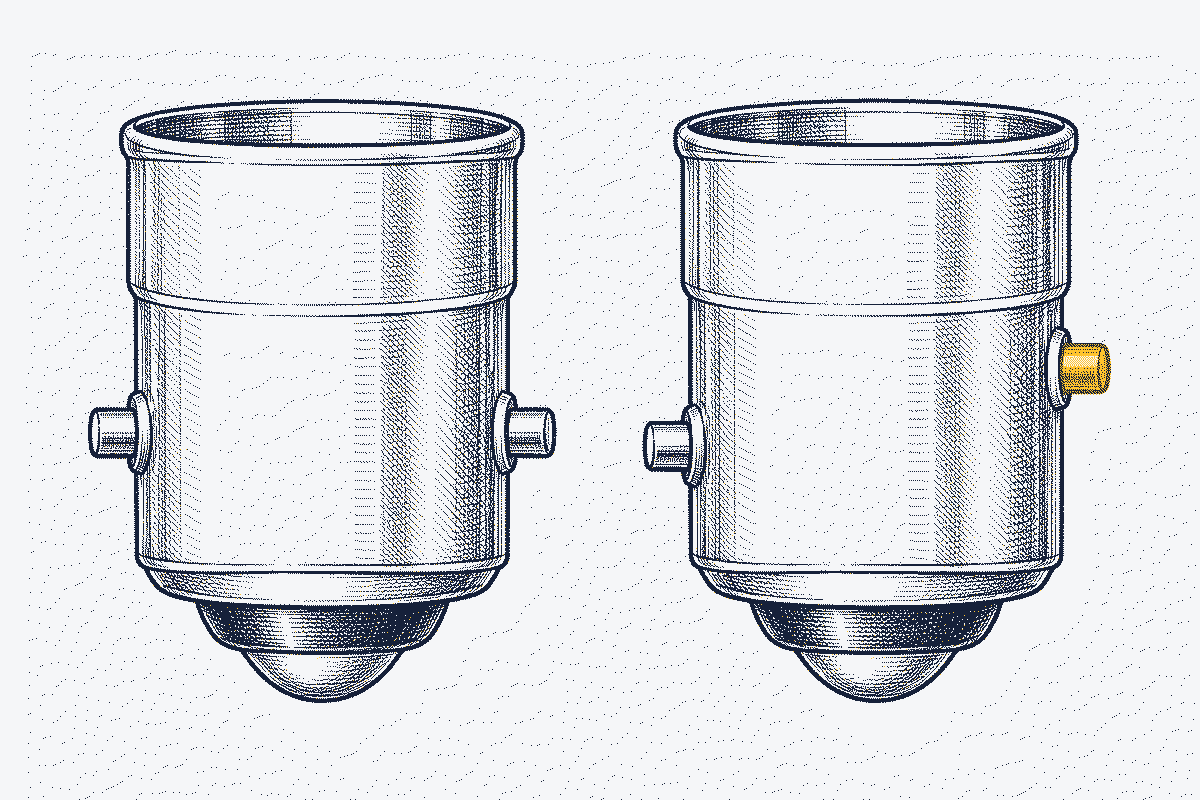
If a bulb needs forcing to lock in, it is the wrong one. A single-filament bulb pushed into a twin socket will at best give you a brake light with no tail light.
What is a W21/5W wedge bulb?
W21/5W does the same job as a P21/5W (21 W brake, 5 W tail) but has an all-glass wedge base, W3x16q, instead of a metal bayonet cap. It pushes straight into the holder rather than twisting.
The two are not interchangeable. In our data the wedge version turns up mainly on the Nissan and Toyota models listed above, but plenty of other makes use it too, so go by the code for your generation rather than the brand.
Do LED rear lights have a replaceable brake bulb?
Usually not. On 60 of the generations we've verified, the brake and tail lights are LED, and our pages mark these as LED rather than giving a bulb code. The Ford Kuga Mk3 is a good example: it still uses an H7 dipped beam, but the brake and tail lights are LED.
When part of an LED rear light stops working, the fix is normally a replacement lamp unit or LED module, not a bulb. Our guide on what to do when a non-replaceable LED fails covers the options.
How do I check my brake lights on my own?
You don't need a helper. At dusk, reverse up close to a garage door, a shop window or another reflective surface, press the brake pedal and look in your mirrors. You should see both brake lights brighten and the high-level brake light come on.
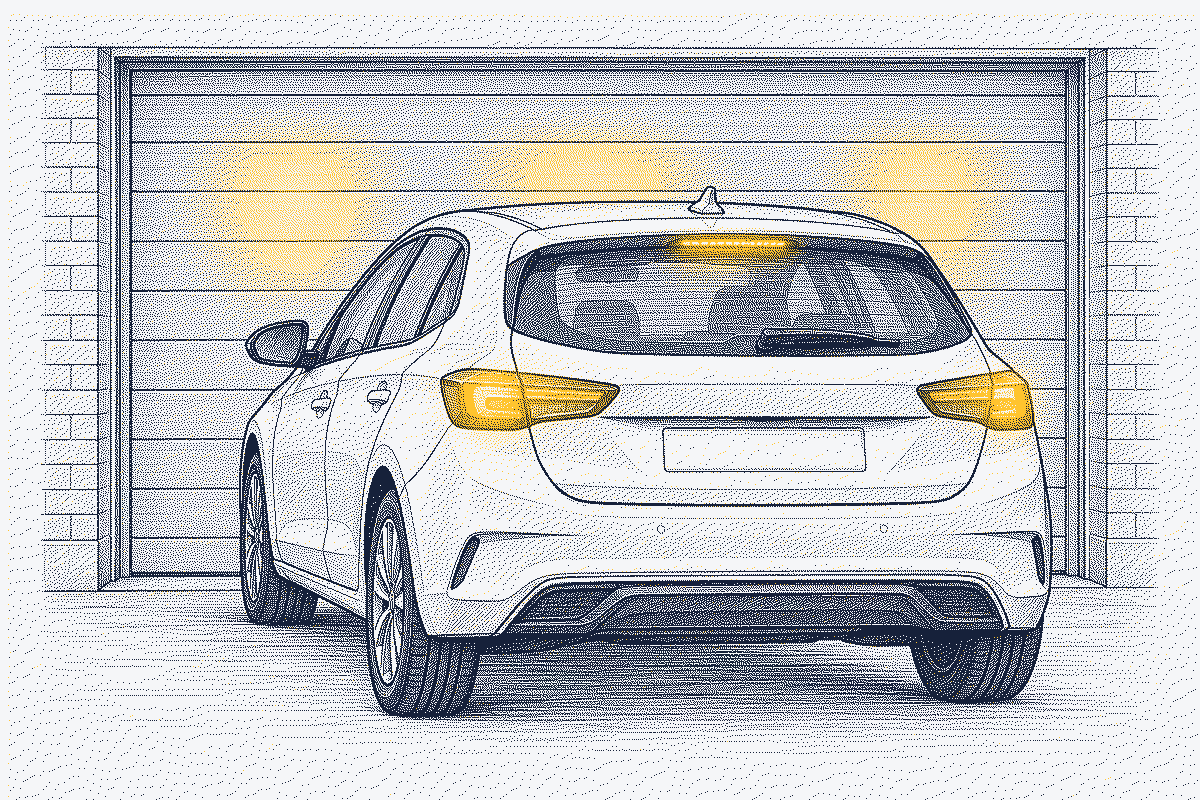
Another option is to prop your phone behind the car recording video, switch the ignition on, press the pedal a few times and then watch the clip back. For a full routine covering every light, see how to check all your car lights on your own.
With a twin-filament bulb, a tail light that works while the brake light stays dim tells you the 21 W filament has gone. You still replace the whole bulb.
What about the high-level brake light?
Most modern cars have a third, centre brake light, usually in the rear spoiler or at the top of the rear window. On many cars it is an LED strip; on others it takes a small bulb. Check it at the same time as the main brake lights. If it isn't listed on your car's page, your handbook's bulb table will cover it.
Is a broken brake light an MOT fail?
Yes. Brake lights are checked on every MOT, along with the other lamps listed in the MOT inspection manual. A brake light that doesn't work also means drivers behind get no warning when you slow down, and driving with defective lights can lead to a fixed penalty.
Brake bulbs are cheap and quick to change on most cars, so it is worth checking them before your MOT rather than after. The gov.uk MOT page explains what the test involves.
Check your car
Each page lists the brake and tail bulb for that generation, with any split by facelift or trim and the source we checked against:
- Ford Fiesta Mk7 bulbs —
P21/5W - BMW 3 Series F30 bulbs —
P21W - Nissan Qashqai J11 bulbs —
W21/5W - Toyota Yaris XP130 bulbs —
W21/5W - VW Golf Mk7 bulbs —
W21W - Ford Kuga Mk3 bulbs — LED
Not listed? Browse all bulb pages or find your make.
Common questions
Can I fit a P21W instead of a P21/5W?
No. The bases are keyed differently, and even if you got it to fit, a single-filament bulb can't give you both a tail light and a brake light. Buy the code listed for your car.
Are the brake light and tail light the same bulb?
On cars with a P21/5W or W21/5W, yes: one bulb with two filaments does both. On cars with a P21W or W21W brake bulb, the tail light is a separate bulb or LED.
Should I replace brake light bulbs in pairs?
There's less reason to than with headlights, because a new brake bulb won't look noticeably different from the old one on the other side. That said, both bulbs have had the same use, so the other may not be far behind. Our guide on replacing bulbs in pairs explains where pairs matter most.
Why does my brake light come on but not get brighter?
On a twin-filament bulb, that usually means the 21 W brake filament has failed while the 5 W tail filament still works. Replace the bulb and check again. If a new bulb doesn't fix it, look at the brake light switch or the bulb holder contacts.
Checked against our verification rules. Spotted something wrong? Tell us.