Should you replace headlight bulbs in pairs?
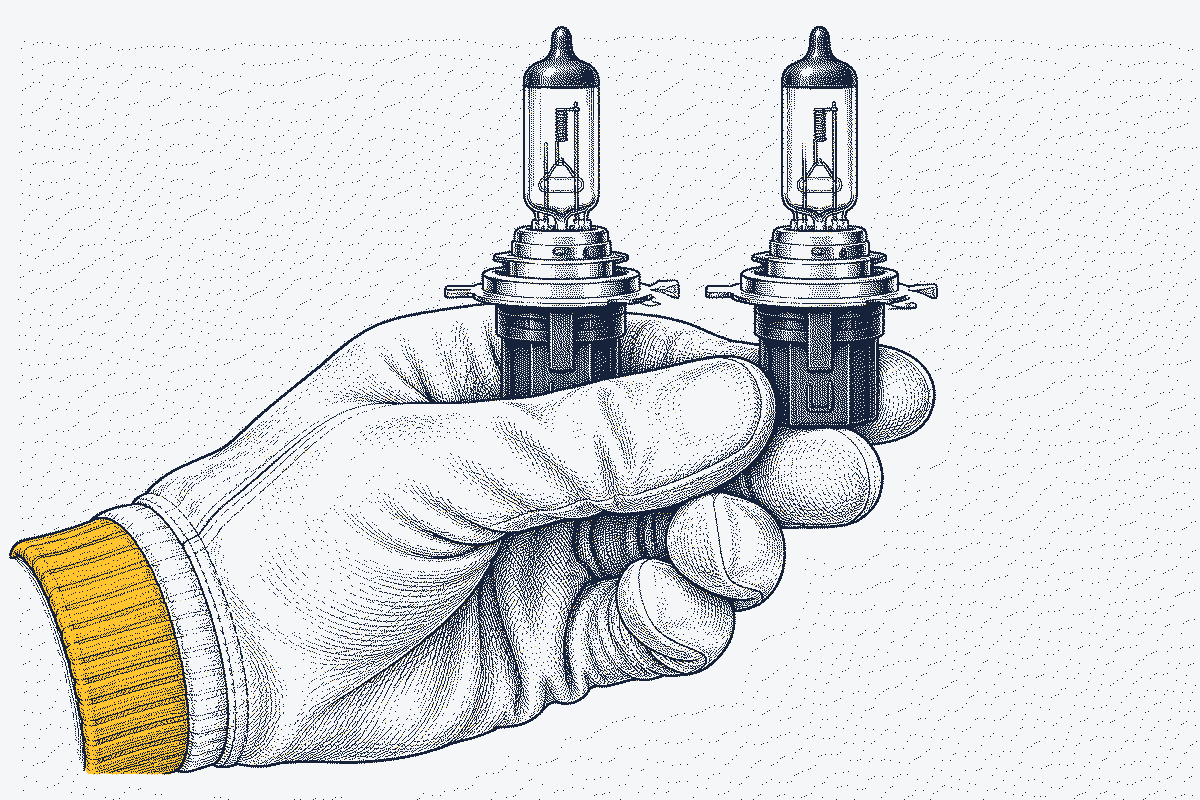
Yes, you should replace headlight bulbs in pairs. When one halogen headlamp bulb fails, the one on the other side has done the same hours and may not last much longer, and a new bulb next to an old one gives uneven light and colour. Replace both dipped beam bulbs together, and both main beam bulbs together.
Indicator, brake, reverse and number plate bulbs are different: replacing just the failed one is fine, as long as you use exactly the same code.
Why should you change both headlight bulbs at the same time?
There are three practical reasons.
The other bulb may not be far behind. Both bulbs were probably fitted at the same time and switch on together every time you drive. When one goes, the other has done the same work. Changing both now saves doing the job twice, which matters on cars where access is awkward.
A matched pair gives even light. Halogen bulbs lose output as they age. A new bulb next to an old one can look brighter and whiter, which makes the beam pattern lopsided and harder to judge at night.
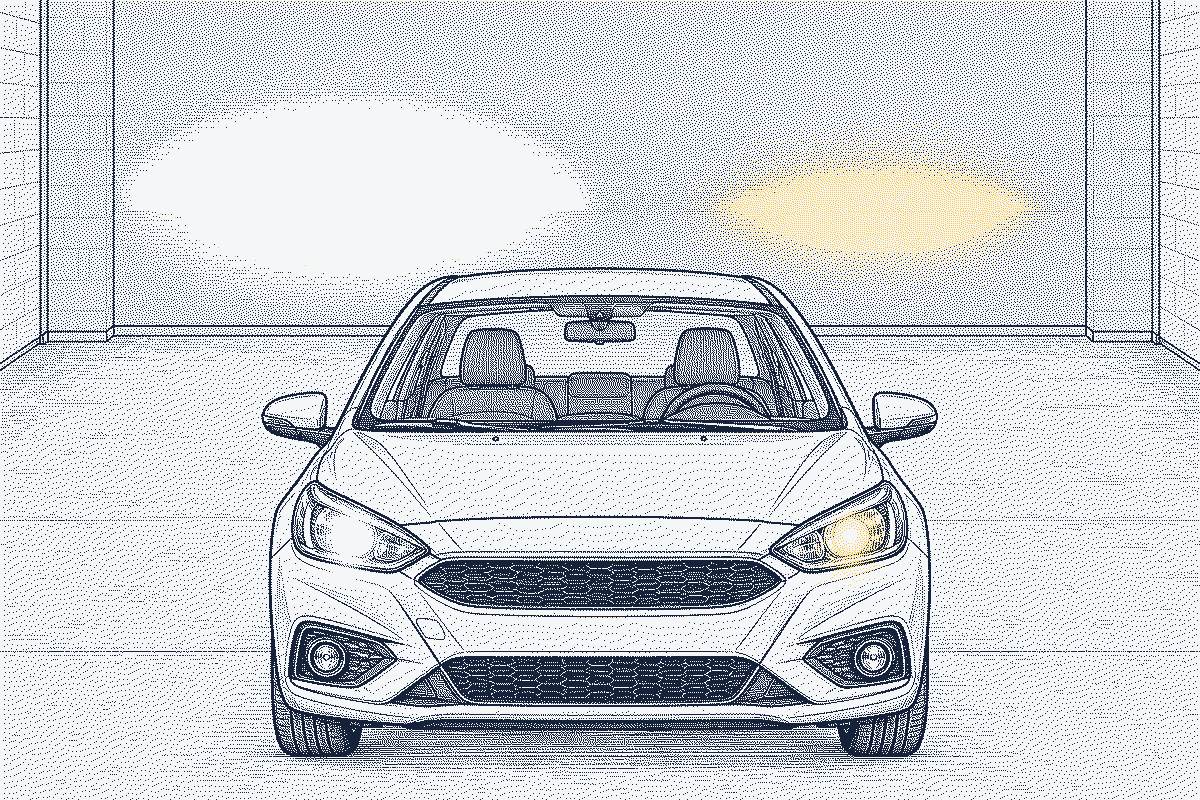
Same bulb, same behaviour. If you choose a higher-performance halogen bulb, fitting it on only one side gives you two different colours and outputs. Using the same product on both sides keeps the beams consistent.
Is it a legal requirement to replace headlight bulbs in pairs?
No. The law and the MOT care that each light works, is aimed correctly and is the right type, not whether the bulbs match. Headlamp aim and operation are part of every UK MOT, and driving with defective lights can lead to a fixed penalty.
So replacing in pairs is good practice rather than a rule. The point is to avoid a second failure a few weeks later, possibly at night or just before an MOT.
What counts as a pair?
A pair means the same bulb in the same position on both sides. Which bulbs those are depends on your car:
| Car (verified) | Dipped beam pair | Main beam pair | Notes |
|---|---|---|---|
| Ford Fiesta Mk7 | H7 × 2 | H1 × 2 | Two different codes, four bulbs |
| VW Polo 6R/6C | H7 × 2 | H7 × 2 | Same code for both beams |
| Toyota Yaris XP130 | H4 × 2 | (same bulbs) | One twin-filament bulb per side does both beams |
| VW Golf Mk7 | H7 × 2 | H15 × 2 | The H15 also runs the daytime running light |
| Nissan Qashqai J11 | H11 × 2 | HB3 × 2 | Less common codes worth stocking |
On an H4 car, one bulb per side does both beams, so if either filament fails you're replacing the whole bulb anyway. On an H15 car like the Golf Mk7, a dead daytime running light is the usual warning sign; see what is an H15 bulb.
Values can differ by facelift or headlamp type within a generation, so check your car page before buying.
Do you need to replace main beam at the same time as dipped beam?
Not necessarily. Main beam gets far less use than dipped beam on most cars, so the two pairs age at different rates. Check main beam works on both sides when you change the dipped bulbs, and replace that pair when one of them fails.
The exceptions are bulbs that do two jobs. An H4 covers both beams in one bulb, and an H15 covers main beam and the daytime running light, so their filaments age together.
Should you replace indicator, brake and tail bulbs in pairs?
There's no real need. Signal bulbs such as PY21W indicators, P21/5W brake/tail bulbs and W5W number plate bulbs don't have a beam pattern to balance. Replace the failed bulb with the same code and check the rest are working.
Two things to watch:
- Use exactly the same code. An amber
PY21Wand a clearP21Wlook similar but have different bases. Our guide to PY21W vs P21W indicator bulbs explains why. - Check the whole set while you're there. Brake lights, indicators, the rear fog lamp and number plate lamps are all checked on every MOT. Our guide to checking your car lights on your own makes that a two-minute job.
Why shouldn't you touch the glass of a halogen bulb?
Halogen bulbs run very hot, and oil from your skin left on the glass can create a hot spot that shortens the bulb's life or damages it. Hold new bulbs by the base or wear clean gloves.
If you do touch the glass, clean it before fitting. Our step-by-step guide to changing a headlight bulb covers this and the other common mistakes, such as not seating the bulb fully before refitting the clip.
Is it worth carrying spare bulbs?
It can be, particularly for headlamp bulbs, which tend to fail when you're using them. A spare pair of the right code in the glovebox means you can fix a failure without hunting for the correct bulb.
How useful that is depends on access. On some cars a headlamp bulb is a quick roadside job; on others it means removing trim or more. Check your car's page and handbook before relying on a roadside change.
What about factory LED headlights?
Pairs don't apply in the same way. Of the 360 UK car generations we've verified, 43 have factory LED dipped beams, and many of those have no replaceable bulb at all. Don't fit LED bulbs into halogen headlamps as a "pair upgrade" either: a halogen unit converted to LED is an MOT fail on cars first used from 1 April 1986. See are LED headlight bulbs legal in the UK.
Check your car
Find the exact headlamp bulbs for your generation:
- Ford Fiesta Mk7 and Ford Focus Mk3
- VW Polo 6R/6C and VW Golf Mk7
- Toyota Yaris XP130
- Nissan Qashqai J11
- Vauxhall Astra J
Or browse every car on the bulbs page.
Common questions
Do I have to change both headlight bulbs?
You don't have to by law, but it's good practice. The other bulb has done the same hours and may not last much longer, and a matched pair gives even light and colour on both sides.
Why is one headlight brighter than the other?
Usually because one bulb is new and the other is old, or the two bulbs are different products. It can also be a dirty or cloudy lens or an aim problem. Fitting a matched pair and cleaning both lenses fixes most cases.
Should I replace brake light bulbs in pairs?
There's no need. Replace the failed bulb with the same code, then check both brake lights and the high-level brake light work.
Can I fit a different brand on each side?
It will work if the code is right, but the colour and output may differ. Using the same product on both sides gives the most even result.
Checked against our verification rules. Spotted something wrong? Tell us.