W5W bulb vs C5W: sidelight and number plate bulbs explained
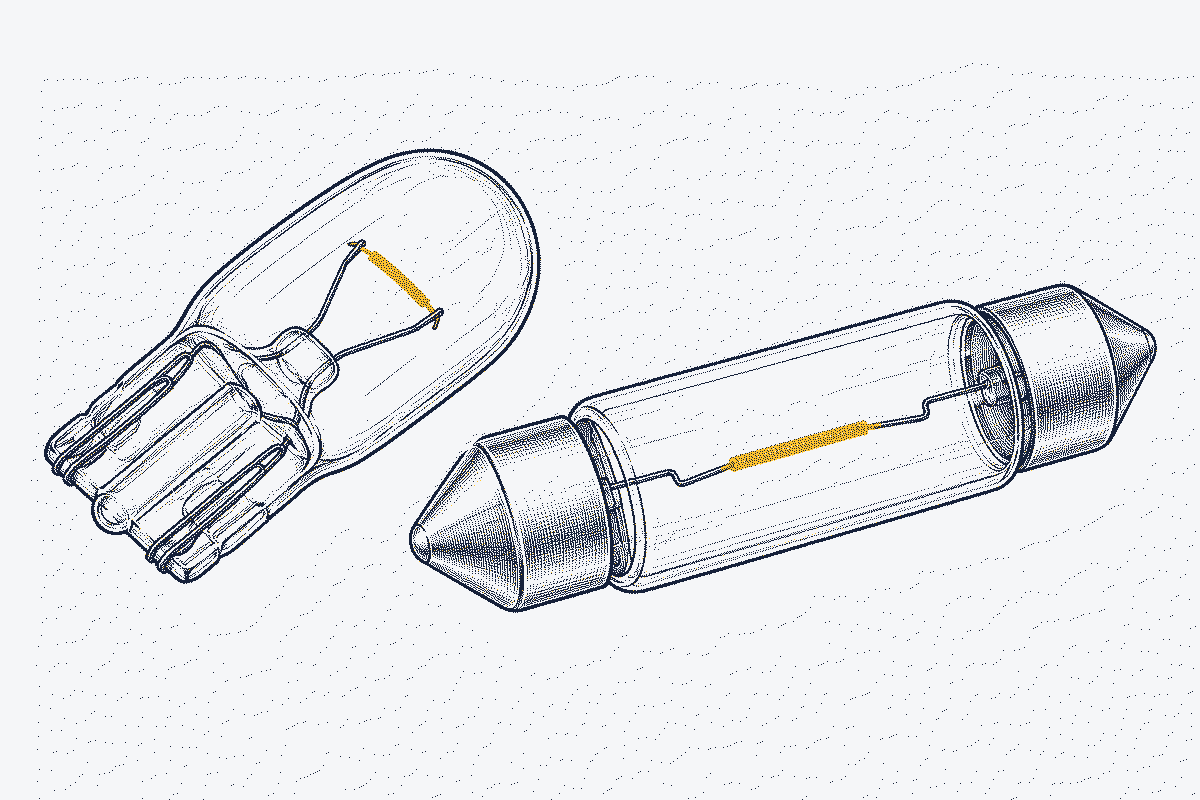
A W5W is a small 5 W bulb with an all-glass wedge base that pushes straight into its holder. A C5W is also 5 W but is a festoon: a slim glass tube, 36 mm long, with a metal cap at each end that clips between two spring contacts. The W5W is the usual sidelight and number plate bulb, the C5W turns up mainly in number plate and interior lamps, they are not interchangeable, and your car's page tells you which one each position takes.
What is a W5W bulb used for?
The W5W is one of the most common bulbs on a UK car. The "W" means wedge base (W2.1x9.5d), the "5W" means 5 watts, and there is no metal cap at all: the wire ends fold over the flattened glass base to make the contacts.
Of the 360 UK car generations we've verified, 175 use a W5W for the sidelight and 172 use one for the number plate lamp. The Ford Fiesta Mk7 and Mk8, VW Golf Mk7, Vauxhall Corsa D and Nissan Qashqai J11 all use it for the number plate lamp.
The same bulb also turns up in interior and boot lights on many cars, so it is worth knowing the code.
What is a C5W bulb?
The "C" in C5W stands for the festoon shape: a straight glass tube with a pointed metal cap (SV8.5) at each end. A C5W is 36 mm long. Festoon bulbs come in other lengths and codes too, so if a festoon in your hand doesn't match 36 mm, check the code printed on it or your handbook rather than assuming.
In our data, 32 of the verified generations use a C5W for the number plate. Two examples:
- Mini Hatch R56:
C5Wnumber plate lamps - VW Transporter T5:
C5Wnumber plate lamps
Festoons are also common in courtesy and boot lights, where the bulb sits flat behind a long lens.
W5W vs C5W at a glance
W5W | C5W | |
|---|---|---|
| Shape | Glass wedge, no cap | Glass tube, metal cap each end |
| Base | W2.1x9.5d | SV8.5 |
| Size | Small, push-in | 36 mm long |
| Power | 5 W | 5 W |
| Sidelights (verified generations) | 175 | — |
| Number plate (verified generations) | 172 | 32 |
| How it fits | Pushes straight into holder | Clips between two spring contacts |
The other number plate entry in our data is LED, on 23 generations, including the Audi A3 8V and BMW 3 Series F30. The Renault Clio V goes the other way: almost all LED elsewhere, but a W5W number plate bulb.
Are sidelights always W5W?
No. After W5W (175), the next most common entry for the sidelight or daytime running light position in our data is LED, on 76 generations. A further 21 use a twin-filament W21/5W, where one bulb runs a bright daytime running light and a dim sidelight.
On some cars the sidelight is built into the headlamp's LED strip and has no bulb to change. Our guide on non-replaceable LED lights explains what to do if one of those fails.
If you're unsure what the letters in a code mean, see how to read a car bulb code.
Can I fit LED replacements for W5W or C5W?
LED versions of both are widely sold. Before you fit them, three things are worth knowing.
Bulb warning lights. Many modern cars monitor bulbs by checking the current they draw. An LED draws far less than a 5 W filament bulb, so the car may think the bulb has failed and show a warning, or flicker the light. LEDs sold as "CAN-bus compatible" or "error free" are designed to avoid this, but there is no guarantee for every car.
Colour. Front sidelights and number plate lamps are meant to show white light, so blue-tinted or coloured LEDs are not suitable.
MOT and the rules. The MOT fail for LED conversions in section 4.1.4 of the inspection manual is about headlamps. For other lamps, the safest course is to read the relevant section of the MOT inspection manual yourself rather than rely on a seller's claim. Our guide on whether LED headlight bulbs are legal covers the headlamp rule in detail.
If you want no doubt at all, fit the filament bulb the car was designed for.
Does the number plate light have to work for the MOT?
Yes. Number plate lamps are checked on every MOT, as are sidelights. A plate that isn't lit at night is easy to miss because you rarely see the back of your own car, so add it to your regular checks. Our guide on how to check all your car lights on your own shows a quick routine.
How do I change a number plate bulb?
On most cars the lamp unclips from underneath the bumper or boot lid. A plastic trim tool or a flat-blade screwdriver wrapped in tape lets you ease it out without marking the paint.
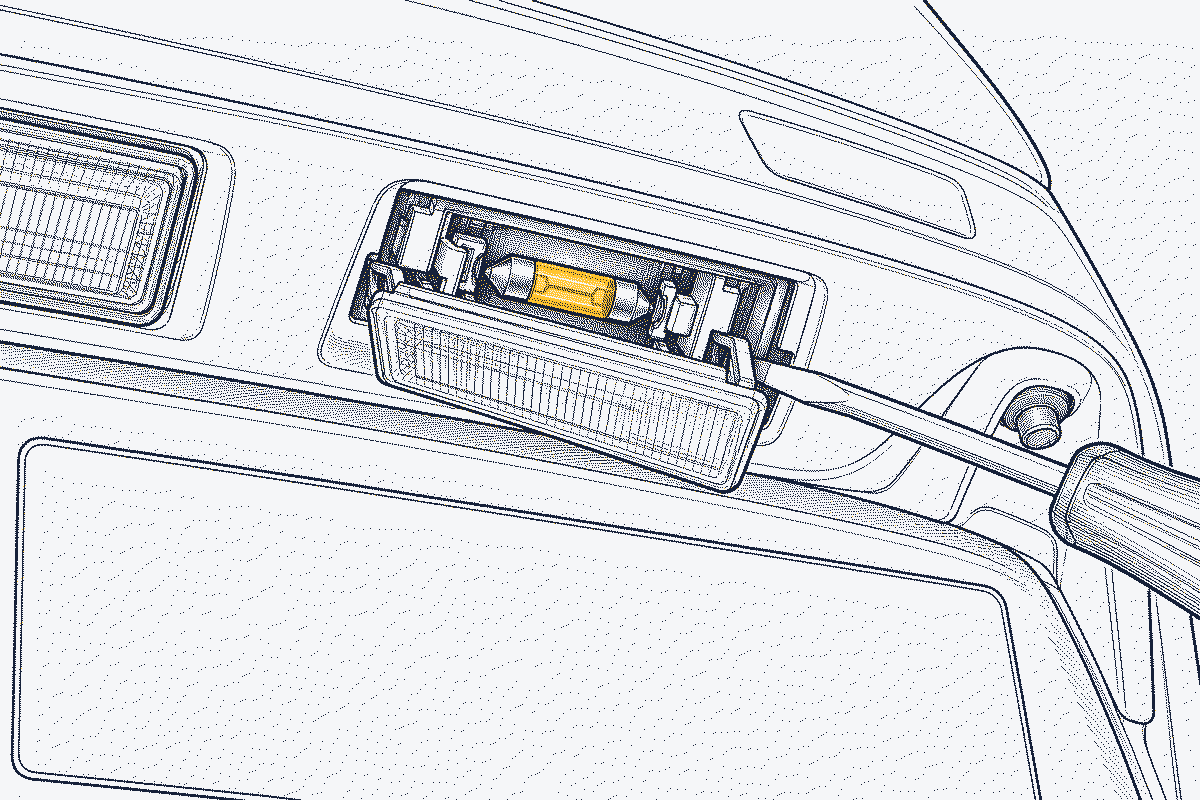
W5W: twist the holder out of the lamp body, pull the old bulb straight out and push the new one in.C5W: lift the festoon out from between the spring contacts. Before fitting the new one, check the contacts are clean and still grip firmly; a loose festoon is a common cause of a plate lamp that flickers.
Switch the lights on to test before you clip the lamp back in.
Check your car
Each page shows the sidelight and number plate bulb for that generation, with the source we checked against:
- Ford Fiesta Mk7 bulbs —
W5Wplate - VW Golf Mk7 bulbs —
W5Wplate - Mini Hatch R56 bulbs —
C5Wplate - VW Transporter T5 bulbs —
C5Wplate - Audi A3 8V bulbs — LED plate
- Renault Clio V bulbs —
W5Wplate
Values can split by facelift or trim; the car page shows any split. Not listed? See all bulb pages.
Common questions
Is W5W the same as 501?
501 is a widely used name for the same type of 5 W capless wedge bulb. The code on the bulb and in your handbook will normally be W5W, so that is the safest thing to match.
Can I use a W5W instead of a C5W?
No. They have completely different bases. A wedge bulb has nothing to grip between festoon contacts, and a festoon won't go into a wedge holder.
Why does my car show a bulb warning after fitting LED sidelights?
The car is reading the LED's low current draw as a failed bulb. Try an LED marked CAN-bus compatible, or go back to a standard W5W.
Are the sidelight and number plate bulbs the same?
On many cars, yes: both are W5W. On others the plate uses a C5W or LED. Check your car's page rather than assuming.
Checked against our verification rules. Spotted something wrong? Tell us.